
Blog

Pakistan’s ecommerce industry is evolving quickly. As more businesses move online, simply having an ecommerce website is no longer enough to run a successful operation.
Online businesses now need to manage multiple sales channels, accept digital payments, process orders, maintain accurate inventory, fulfill shipments, handle returns, and deliver a smooth customer experience.
This is where ecommerce solutions come in.
From ecommerce platforms and payment gateways to order management, inventory, fulfillment, and logistics, the right technology can help businesses connect different parts of their operations and reduce the manual work involved in running an online store.
In this guide, we'll explore the different types of ecommerce solutions available to businesses in Pakistan, how they work together, and what businesses should consider when choosing the right solutions for their needs.
What Are Ecommerce Solutions?
Ecommerce solutions are the platforms, technologies, and services that help businesses sell and operate online.
They can support different parts of the ecommerce journey, including:
- Creating and managing an online store
- Accepting customer payments
- Managing orders
- Tracking inventory
- Processing and fulfilling orders
- Managing deliveries and returns
- Tracking business performance
- Improving the customer experience
For a small business, this may mean using an e-commerce platform, payment gateway, and courier service.
For a growing or multi-channel business, the technology stack can become much more comprehensive, with systems working together to manage thousands of orders and multiple sales channels.
Why Ecommerce Businesses in Pakistan Need Multiple Solutions
Running an ecommerce business involves much more than putting products on a website.
A typical order may involve several different systems:
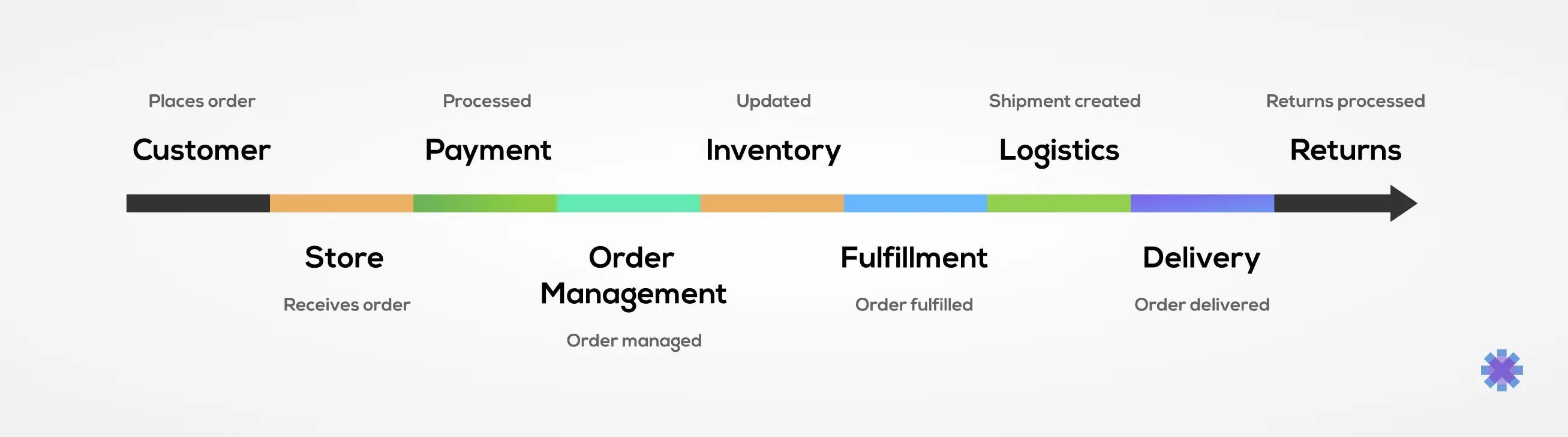
When these processes are managed separately, businesses can end up relying heavily on spreadsheets, manual data entry, and multiple disconnected systems.
This can lead to:
- Delayed order processing
- Inventory discrepancies
- Payment reconciliation issues
- Manual shipment creation
- Limited visibility into order status
- Higher operational costs
- Poor customer experiences
As order volumes grow, these challenges become harder to manage manually.
Connected ecommerce solutions help businesses automate these processes and create greater visibility across the entire order lifecycle.
Types of Ecommerce Solutions in Pakistan
Different businesses have different requirements. Some may only need a basic online store and payment solution, while larger brands may need an integrated system covering orders, inventory, payments, fulfillment, and logistics.
Here are some of the most important ecommerce solutions businesses can consider.
Ecommerce Platforms
An ecommerce platform provides the foundation for an online store.
Businesses can use platforms such as Shopify, WooCommerce, or custom-built ecommerce websites to create product catalogs, manage customers, accept orders, and operate their online storefront.
The right platform depends on factors such as:
- Business size
- Product catalog
- Technical requirements
- Budget
- Required integrations
- Expected order volume
- Sales channels
However, the ecommerce platform is only one part of the overall operation.
Once orders start coming in, businesses also need systems to manage payments, inventory, fulfillment, and delivery.
Ecommerce Payment Solutions
Payments are a critical part of the online shopping experience.
Ecommerce payment solutions allow businesses to accept payments through different methods, including cards, bank payments, digital wallets, and other available payment options.
A good payment solution should help businesses provide:
- A smooth checkout experience
- Secure payment processing
- Multiple payment options
- Transaction visibility
- Payment reporting
- Reliable payment confirmation
For businesses focused on increasing prepaid orders, reducing payment friction is particularly important.
Solutions such as XPay by PostEx can help businesses create a more integrated payment experience while providing visibility into transaction performance.
The goal is not simply to accept payments, but to make the payment step as seamless as possible for the customer.
Ecommerce Order Management Solutions
As an ecommerce business grows, managing orders manually can become increasingly difficult.
An Order Management System (OMS) helps businesses centralize and manage orders from different sales channels.
An OMS can support processes such as:
- Order capture
- Order routing
- Order status management
- Inventory allocation
- Returns and exchanges
- Multi-channel order management
This becomes particularly useful for businesses selling through multiple channels.
For example, a brand may receive orders from its own website, a marketplace such as Daraz, and physical retail stores.
Instead of managing each channel separately, an OMS can provide a centralized view of orders and inventory.
XStak OMS is designed to help businesses manage these multi-channel ecommerce operations through a centralized order management system.
Ecommerce Inventory Management Solutions
Inventory management becomes more complex as businesses add products, warehouses, stores, and sales channels.
Without accurate inventory visibility, businesses can face problems such as:
- Overselling products
- Selling out-of-stock items
- Incorrect stock counts
- Delayed replenishment
- Poor allocation of inventory
An e-commerce inventory solution helps businesses track stock across locations and sales channels.
For multi-channel businesses, synchronization is especially important.
If a product is sold through a website, marketplace, and retail store, inventory needs to reflect that sale across the relevant systems.
Real-time inventory visibility can help businesses make better decisions and provide customers with more accurate product availability.
XStak OMS provides inventory management capabilities that help businesses synchronize inventory across ecommerce stores and physical locations. It provides real-time inventory visibility across online and offline channels, helping businesses manage stock more efficiently as their operations grow.
With centralized inventory visibility, businesses can make better fulfillment decisions, reduce inventory discrepancies, and provide customers with more accurate product availability.
Ecommerce Logistics and Fulfillment Solutions
Once an order is placed and payment is confirmed, it needs to reach the customer.
Ecommerce logistics and fulfillment solutions help businesses manage this part of the customer journey.
Depending on the business, logistics operations may include:
- Shipment creation
- Courier assignment
- Order tracking
- Last-mile delivery
- Cash-on-delivery management
- Returns
- Delivery reconciliation
For businesses handling large order volumes, manually creating shipments and tracking deliveries can consume significant operational resources.
Integrated logistics solutions can connect order management with fulfillment and delivery, reducing manual steps and giving businesses better visibility into shipment status.
PostEx Logistics provides ecommerce logistics and fulfillment solutions that help businesses manage shipping, last-mile delivery, cash-on-delivery, tracking, and returns through a more connected process.
Integrated logistics solutions can connect order management with fulfillment and delivery, reducing manual steps and giving businesses better visibility into shipment status.
Customer Experience Solutions
Customer experience extends beyond the moment a customer clicks “Place Order.”
Customers also expect to know:
- Whether their order was confirmed
- When it will be shipped
- Where the shipment is
- When it will arrive
- How they can return or exchange a product
Managing these touchpoints manually can create additional work for ecommerce teams and make the customer experience less consistent.
XStak OMS helps businesses manage the communication and post-order experience through a connected order management workflow.
Order updates and communication can keep customers informed throughout the order journey, while returns and exchanges can be managed through the same order management process.
This creates a more connected experience from order confirmation to delivery, and from delivery to return or exchange.
By bringing order management, customer communication, tracking, and returns/exchanges into a connected workflow, businesses can reduce manual coordination and provide customers with a more consistent experience.
Ecommerce Analytics and Reporting
As an ecommerce business grows, decisions increasingly depend on data.
Businesses need visibility into areas such as:
- Order volume
- Revenue
- Units sold
- Average order value
- Inventory
- Pending orders
- Cancellations
- Returns
- Fulfillment turnaround
- Courier performance
- Sales by location
Without centralized reporting, teams may need to combine data from different systems to understand what is happening across the business.
XStak OMS provides built-in analytics and reporting to give ecommerce teams a centralized view of their operations.
Its analytics dashboard provides visibility into sales, orders, inventory, returns, cancellations, fulfillment, and logistics performance. Teams can also analyze metrics such as returned orders, return ratios, cancellation ratios, pending revenue, sales by location, courier performance, and delivered orders.
XStak OMS also provides detailed reports, including Order Dump, Inventory Dump, SKU Sold Dump, Replenishment Report, Sales Report, Order List, Fulfillment Turnaround Report, and Financial Information Report.
This gives businesses a clearer view of what is happening across their order and fulfillment operations.
Instead of relying on disconnected reports, teams can use centralized data to identify problems faster, monitor performance, and make more informed decisions about sales, inventory, fulfillment, and logistics.
How Ecommerce Solutions Work Together
The biggest benefit of ecommerce technology often comes from integration.
Instead of treating every system as a separate tool, businesses can connect different parts of the ecommerce operation.
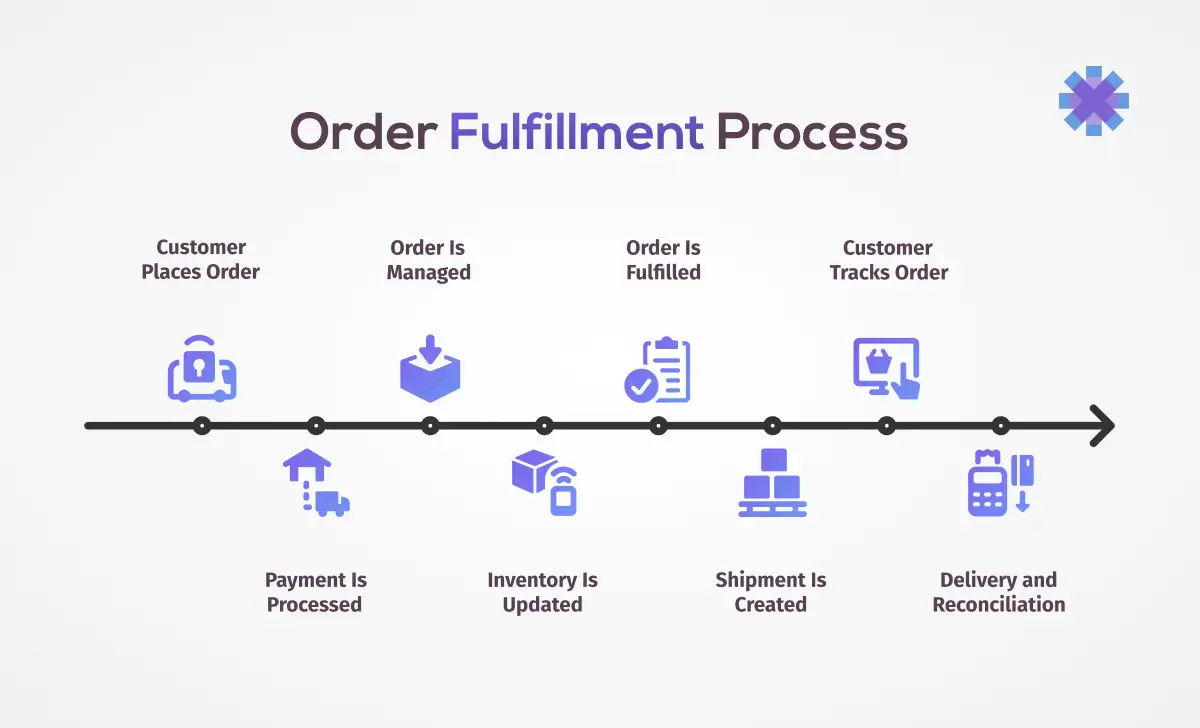
Consider a customer purchasing a product from an online store.
1. Customer Places an Order
The customer selects a product and places an order through the ecommerce website.
2. Payment Is Processed
The payment gateway processes the transaction and confirms whether the payment was successful.
3. Order Is Managed
The order management system receives the order and determines how it should be processed.
4. Inventory Is Updated
The relevant inventory is allocated and updated to reflect the new order.
5. Order Is Fulfilled
The order is prepared for shipment based on the business's fulfillment process.
6. Shipment Is Created
The logistics system receives the shipment information and initiates delivery.
7. Customer Tracks the Order
The customer receives tracking information and updates throughout the delivery journey.
8. Delivery and Reconciliation
Once the order is delivered, the business can update its records and reconcile the transaction.
This connected approach reduces the need for teams to manually move information between systems.
Ecommerce Solutions for Multi-Channel Businesses
Many growing Pakistani brands are no longer selling through just one channel.
A single brand may sell through:
Website + Marketplace + Retail Outlet
For example, a fashion or footwear brand could operate a Shopify or WooCommerce store, sell products through Daraz, and also maintain physical retail outlets.
This creates a new operational challenge.
Each channel generates orders and affects inventory. If these channels operate independently, businesses may have to manage separate systems for:
- Orders
- Inventory
- Customers
- Payments
- Fulfillment
- Reporting
This can create unnecessary complexity.
An integrated order management solution can help bring these channels together and provide a centralized operational view.
The objective is simple: one brand, multiple channels, connected operations.
How to Choose the Right Ecommerce Solutions in Pakistan
There is no single ecommerce solution that works for every business.
The right technology depends on the business model, size, sales channels, and operational complexity.
Before choosing a solution, businesses should consider the following.
1. Business Size
Businesses of every size can benefit from advanced automation to improve efficiency, simplify operations, and scale more effectively.
2. Sales Channels
Consider whether the solution supports your website, marketplaces, retail stores, social commerce, or other channels.
3. Integrations
Your ecommerce solutions should be able to connect with the platforms and systems your business already uses.
4. Payment Support
Evaluate whether the solution supports the payment methods your customers prefer and provides sufficient transaction visibility.
5. Logistics
Consider how easily orders can move from your ecommerce platform to fulfillment and delivery.
6. Scalability
The solution should be capable of handling increasing order volumes, products, customers, and sales channels.
7. Automation
Look for opportunities to automate repetitive processes such as order processing, inventory updates, shipment creation, and reporting.
8. Reporting
Good reporting can help teams understand what is happening across sales, payments, inventory, and fulfillment.
9. Total Cost
Don't evaluate software based only on its subscription price.
Consider the overall cost of implementation, integrations, transaction fees, operational resources, and ongoing maintenance.
Ecommerce Solutions for Different Business Stages
The right technology stack can change as a business grows.
The goal should not be to implement every possible solution from day one.
Businesses should choose technology that meets their current operational needs while giving them room to grow.
XStak OMS is built for businesses of all sizes, with pricing based on order volume, making it easier to start with what you need today and scale as your order volume grows.
The Future of Ecommerce Solutions in Pakistan
Pakistan's ecommerce ecosystem will continue to evolve as businesses and consumers become more comfortable with digital commerce.
Future ecommerce operations are likely to place greater emphasis on:
- Digital payments
- Omnichannel commerce
- Ecommerce automation
- Real-time inventory
- Faster fulfillment
- Data-driven decision-making
- Personalized customer experiences
- Integrated commerce platforms
The businesses best positioned to scale will not necessarily be those using the most tools.
They will be the ones that connect the right tools and processes together.
A modern ecommerce operation should allow information to move smoothly from the customer's first interaction through payment, order processing, inventory, fulfillment, delivery, and beyond.
Frequently Asked Questions
What are ecommerce solutions?
Ecommerce solutions are technologies and services that help businesses sell and operate online, including ecommerce platforms, payment solutions, order management, inventory, fulfillment, logistics, and analytics.
What ecommerce solutions does an online business need in Pakistan?
The exact requirements depend on the business. Most online businesses need an ecommerce platform, payment solution, logistics, and basic order management. Growing and multi-channel businesses may also require OMS, inventory management, fulfillment, and analytics solutions.
What is the best ecommerce platform in Pakistan?
There is no single best platform for every business. Shopify, WooCommerce, and custom ecommerce platforms can each be suitable depending on business requirements, technical capabilities, budget, and integrations.
Why does an ecommerce business need an OMS?
An OMS helps businesses centralize and manage orders across different sales channels. It can improve order visibility, inventory allocation, fulfillment workflows, and returns management.
How can ecommerce businesses manage multiple sales channels?
Businesses can use an integrated order management system to centralize orders and synchronize inventory across channels such as websites, marketplaces, and retail stores.
How can ecommerce businesses improve order fulfillment?
Businesses can improve fulfillment by automating order processing, maintaining accurate inventory, integrating logistics, and using centralized visibility across the order lifecycle.
How much do ecommerce solutions cost in Pakistan?
Costs vary significantly depending on the platform, business size, order volume, integrations, and required functionality. Businesses should consider both technology costs and the operational savings that automation can provide.
Related Posts
.webp)

Become An Omnichannel Retailer
Take a personalized tour of XStak's retail operating modules with our Sales experts and learn how XStak can enable you to grow.
