
Blog

A customer receives an ecommerce order but wants to return it.
The customer reaches out through Instagram, Facebook, email, WhatsApp, or customer support. The merchant checks the order, confirms whether it qualifies for a return, arranges the return shipment, receives the product, verifies it, and then processes a refund or exchange.
The sale may be complete, but the order journey isn't over.
This is why returns management is an important part of ecommerce operations.
For growing ecommerce businesses in Pakistan, returns and exchanges can involve customer support, operations, logistics, inventory, and finance. When these processes are managed manually, keeping everything connected can become difficult.
Effective returns management brings these activities into a structured workflow.
In this guide, we'll explain how ecommerce returns work, the challenges businesses face, and how XStak OMS can help merchants manage returns and exchanges more efficiently.
What Is Return Management in Ecommerce?
Ecommerce returns management is the process of handling a product from the moment a customer requests a return or exchange until the return is verified and the appropriate resolution is completed.
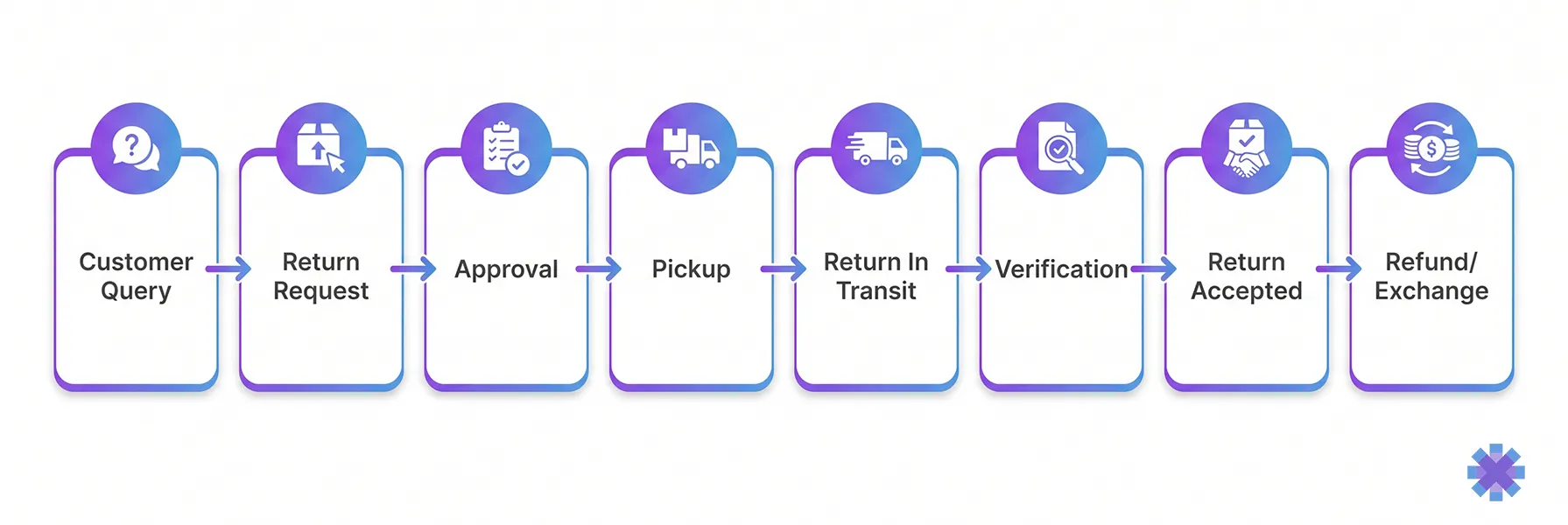
A typical return process can look like this:
Customer Query → Return Request → Approval → Pickup → Return In Transit → Verification → Return Accepted → Refund/Exchange
The process can involve:
- Return requests
- Exchange requests
- Return pickup
- Reverse logistics
- Product verification
- Refunds
- Replacement orders
- Inventory updates
- Customer communication
- Return reporting
A return is not one action.
It is a series of connected steps involving different teams.
Why Returns Management Matters for Pakistani Ecommerce Businesses
Returns affect more than just customer support.
They can have an impact on:
- Revenue
- Inventory
- Customer experience
- Logistics costs
- Warehouse operations
- Customer support
- Cash flow
- Operational efficiency
For example, when a customer requests a return, the support team may need to find the original order. The operations team may need to approve the request. A logistics partner may need to collect the product. The warehouse then needs to receive and verify it before the merchant can complete the refund or exchange.
When return volumes are low, this may be manageable manually.
As the business grows, the number of return requests, shipments, products, and teams involved can make the process much harder to coordinate.
How the Ecommerce Returns Process Works
A typical ecommerce return can move through several stages:
1. Customer Raises a Return or Exchange Query
The process often starts with the customer contacting the business.
This may happen through:
- Social media
- Customer support
- Phone
- Other communication channels
The customer provides information about the order and explains why they want to return or exchange the product.
2. Merchant Reviews the Request
The merchant checks the order and reviews the request according to its return or exchange policy.
The team may need to confirm:
- Order details
- Product details
- Purchase date
- Return reason
- Eligibility
- Exchange requirements
3. Return Pickup Is Arranged
Once the return is approved, the product needs to be collected from the customer.
This moves the process from the customer side into the logistics side.
4. Return Moves Through Logistics
The product is picked up and transported back to the relevant merchant location.
The business needs visibility into whether the return has been:
- Picked up
- Dispatched
- Received
- Delivered to the merchant
5. Product Is Verified
Once the product reaches the merchant, it needs to be checked.
The merchant may verify the product's condition and determine whether it meets the return or exchange requirements.
6. Return Is Accepted
If the returned product meets the required conditions, the return can be accepted.
7. Refund or Exchange Is Completed
The final step depends on the customer's request and the merchant's policy.
The business may process:
Refund → Customer receives the applicable refund
or
Exchange → Replacement product is processed
The important part is maintaining visibility throughout the process rather than simply marking the order as "returned."
Three Sides of Ecommerce Returns Management
Returns involve three different sides of the ecommerce operation:
Customer → Merchant → Logistics
Each side has a different responsibility.
1. Customer Side
The customer starts the process by raising a return or exchange query.
They may contact the brand through social media, email, WhatsApp, or customer support.
From the customer's perspective, the important questions are simple:
- Can I return this product?
- How do I request a return?
- When will it be picked up?
- Has the merchant received it?
- Has my return been accepted?
- When will I receive my refund?
- When will my replacement arrive?
The merchant needs to respond to these questions with accurate order information.
This is where having the original order and return status readily available becomes important.
2. Merchant Side
The merchant manages the operational side of the return.
This can include:
- Reviewing customer queries
- Finding the original order
- Reviewing the return request
- Approving or rejecting the return
- Coordinating the return
- Verifying the returned product
- Processing refunds
- Arranging exchanges
- Updating inventory
- Tracking return performance
For the merchant, the challenge is keeping all these activities connected.
3. Logistics Side
The logistics team handles the physical movement of the returned product.
This may include:
- Return shipment creation
- Pickup
- Reverse logistics
- Return tracking
- Delivery to the merchant
- Shipment status updates
The logistics status needs to remain connected to the original order and return request.
Otherwise, the merchant may know that a return has been approved but not know where the product currently is.
The key takeaway
The customer raises the query, the merchant manages the return, and logistics moves the product. Effective returns management keeps these activities connected.
Common Challenges With Manual Returns Management
Managing a few returns manually may not be difficult.
The problem starts when the return volume grows.
Return Queries Are Spread Across Channels
Customers may contact the business through Instagram, Facebook, email, WhatsApp, or customer support.
The merchant then needs to find the relevant order and understand what happened.
Without a structured process, this information can become difficult to manage.
Return Status Is Difficult to Track
A return may be approved but still waiting for pickup.
Another may already be in transit.
Another may have reached the warehouse and is waiting for verification.
If these stages aren't clearly tracked, teams may spend time checking different systems for updates.
Return Logistics Require Coordination
The return doesn't end when the merchant approves it.
The product still needs to move from the customer back to the business.
Managing these shipments manually can add operational work.
Product Verification Takes Time
Returned products need to be checked before the merchant can complete the process.
When return volumes increase, manual verification and tracking can create delays.
Inventory May Not Be Updated Quickly
Once a returned product is accepted, the business may need to update its inventory.
Delays can create discrepancies between physical stock and system records.
Refunds and Exchanges Need Coordination
A return can involve customer support, operations, warehouse, finance, and logistics.
Without a connected process, each team may have only part of the information.
Reporting Becomes Difficult
Businesses need to understand not only how many products were returned, but also:
- Why customers returned them
- Which products have higher return rates
- Which locations receive more returns
- How many returns are in transit
- How much revenue has been returned
- How long returns take to complete
Manual reporting makes this harder.
How an Automated Returns Management Process Works
Automation can turn a series of manual tasks into a structured workflow.
A typical process can look like:
Customer Query → Return Request → Approval → Return In Transit → Verification → Accepted → Refund/Exchange
Instead of relying on separate spreadsheets and manual updates, teams can track the return through defined stages.
This gives the merchant a clearer view of what needs to happen next.
It also makes it easier to answer customer queries because the team can access the latest order and return information.
Benefits of Automated Returns Management
Centralized Return Management
Return information can be managed through one operational system instead of multiple spreadsheets or manual records.
Better Return Visibility
Teams can see whether a return is requested, in transit, awaiting verification, accepted, or awaiting refund.
Faster Resolution
Clearly defined workflows can reduce unnecessary coordination between teams.
Better Inventory Control
Accepted returns can be connected to inventory processes, helping businesses maintain better visibility of stock.
Easier Exchange Management
Exchange requests can remain connected to the original order, making it easier to manage the next step.
Better Customer Support
When customer queries come through different channels, support teams need quick access to the relevant order information.
A centralized order and return workflow can help teams respond with more accurate information.
Better Reporting
Businesses can use return data to identify patterns, measure performance, and understand where operational problems are occurring.
XStak OMS for Returns and Exchange Management
XStak OMS provides a dedicated Return/Exchange Management workflow that helps merchants manage the operational side of ecommerce returns and exchanges.
The important distinction is that the customer-facing query can originate outside XStak OMS.
For example, a customer may contact a brand through social media, email, WhatsApp, or customer support.
The merchant's team can then use the relevant order information in XStak OMS to manage the return or exchange process.
This creates a connected workflow between the customer query and the merchant's operational process.
A Dedicated Return/Exchange Workflow
XStak OMS provides dedicated stages for managing returns and exchanges.
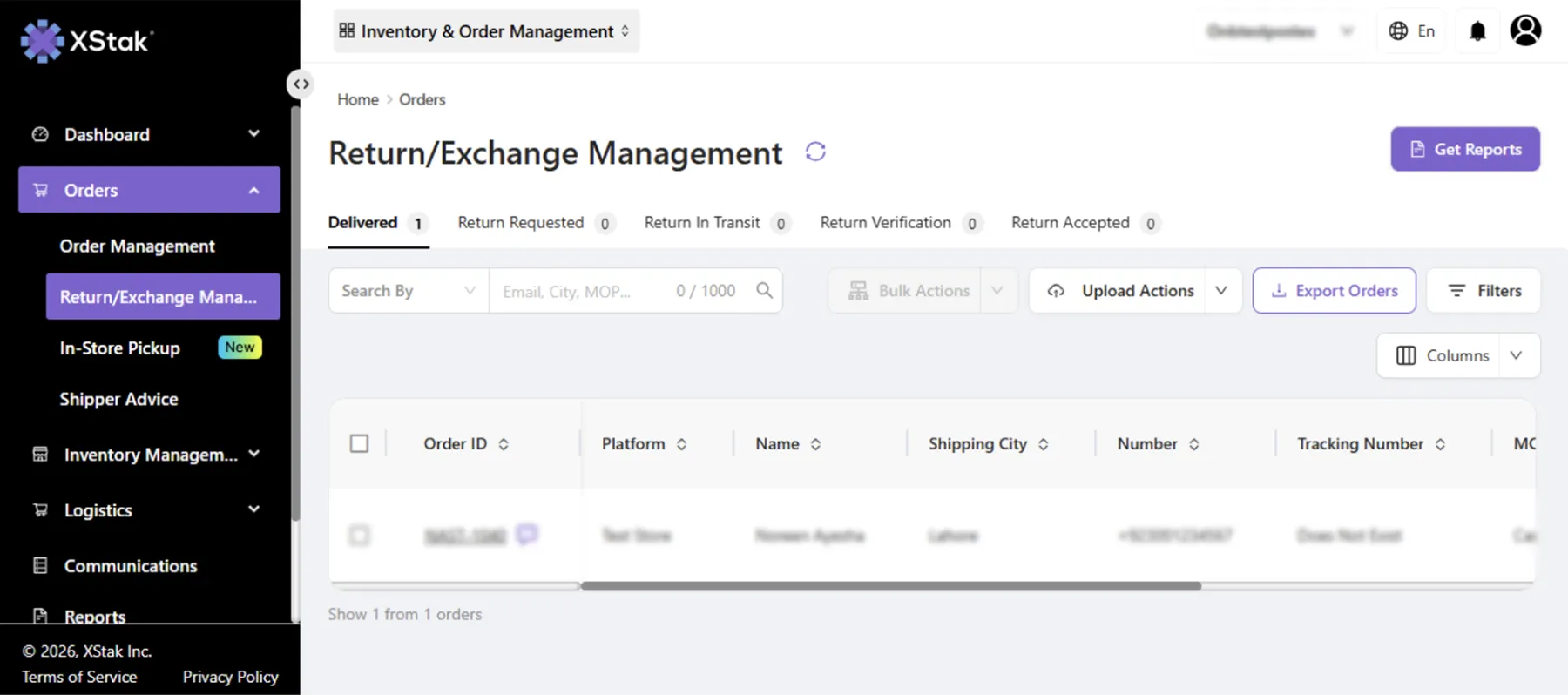
The workflow includes stages such as:
Delivered → Return Requested → Return In Transit → Return Verification → Return Accepted
It also provides visibility into:
Pending Refund Orders → Refunded Orders
This allows merchant teams to see where returns currently stand instead of treating every return as a single status.
Manage Returns From the Order
Returns remain connected to the original order.
This means the merchant can work with the relevant order information while managing the return rather than treating the return as an entirely separate activity.
This is particularly useful when a customer contacts the business with a return-related question.
The team can refer to the order information and manage the next operational step.
Track Returns Through Different Stages
XStak OMS provides visibility into different stages of the return journey, including:
- Return requested
- Return in transit
- Return verification
- Return accepted
- Pending refund
- Refunded orders
This gives operations teams a clearer picture of outstanding returns.
Manage Exchanges
Returns and exchanges can be managed through the same Return/Exchange Management workflow.
This helps merchants handle different post-purchase requests without creating completely separate manual processes.
Connect Returns With Logistics
A return also involves physical movement.
Once a return is approved, the product needs to move from the customer back to the merchant.
XStak OMS can connect the order and return workflow with the logistics operation, helping merchants maintain better visibility as the product moves through the return process.
Support Customer Queries With Order Information
Customers may raise return or exchange queries through different channels.
The merchant's support team can then use XStak OMS to access the relevant order and return status.
This is important because customer communication and operational management are closely connected.
The customer may simply ask:
"What's happening with my return?"
The support team needs to know whether it was requested, picked up, received, verified, accepted, or refunded.
A structured return workflow makes this information easier for the merchant team to manage.
Analytics and Reporting
Returns also generate valuable operational data.
XStak OMS provides visibility into metrics such as:
- Returned orders
- Returned revenue
- Return ratio
- Return reasons
- Courier performance
- Sales by location
This allows businesses to move beyond processing returns and start understanding their return operation.
For example, return data can help teams identify whether certain products, locations, or operational processes are contributing to higher return volumes.
What Should You Look for in an Ecommerce Returns Management System?
When choosing a returns management solution, businesses should look beyond simply recording that an order was returned.
The system should support the wider return lifecycle.
Return and Exchange Management
The system should provide a structured process for handling both returns and exchanges.
Order-Level Visibility
Returns should remain connected to the original order.
Return Status Tracking
Teams should be able to see where each return currently stands.
Reverse Logistics
Return shipments should connect with the logistics process.
Product Verification
Businesses should be able to verify returned products before accepting them.
Refund Visibility
Teams should be able to identify pending and completed refunds.
Inventory Management
Accepted returns should connect with inventory processes.
Customer Support
Merchant teams should have the order information needed to respond to customer return queries.
Analytics and Reporting
Businesses should be able to analyze return volumes, reasons, ratios, and operational performance.
When Should an Ecommerce Business Automate Returns Management?
The need for automation isn't determined by return volume alone.
Operational complexity is often a better indicator.
Businesses should consider automating returns when:
- Return requests are increasing
- Teams use spreadsheets to track returns
- Customer queries are coming from multiple channels
- Customers frequently ask about return status
- Return pickups are difficult to coordinate
- Returns involve multiple locations
- Exchanges require manual coordination
- Refund processing takes too long
- Returned inventory isn't updated quickly
- Teams struggle to understand return reasons
- Return reporting requires manual consolidation
The right time to automate returns isn't necessarily when returns reach a specific number.
It's when managing them manually starts creating delays, errors, or unnecessary operational work.
Returns Management: What Ecommerce Businesses Need to Get Right
A good returns process needs to work across three sides:
Customer → Merchant → Logistics
The customer needs clear communication.
The merchant needs visibility into the order, return status, verification, refund, exchange, and inventory.
Logistics needs to move the returned product and provide shipment status.
When these activities are managed separately, returns can become difficult to coordinate.
A connected order management system can bring the merchant-side processes together and give teams better visibility across the return lifecycle.
For ecommerce businesses in Pakistan, XStak OMS helps merchants manage returns and exchanges as part of the broader order management process from return requests and verification to accepted returns, refunds, exchanges, inventory, and reporting.
Make Returns Easier to Manage
Connect orders, returns, exchanges, inventory, and fulfillment through XStak OMS.
Related Posts
.webp)


Become An Omnichannel Retailer
Take a personalized tour of XStak's retail operating modules with our Sales experts and learn how XStak can enable you to grow.
